

 By
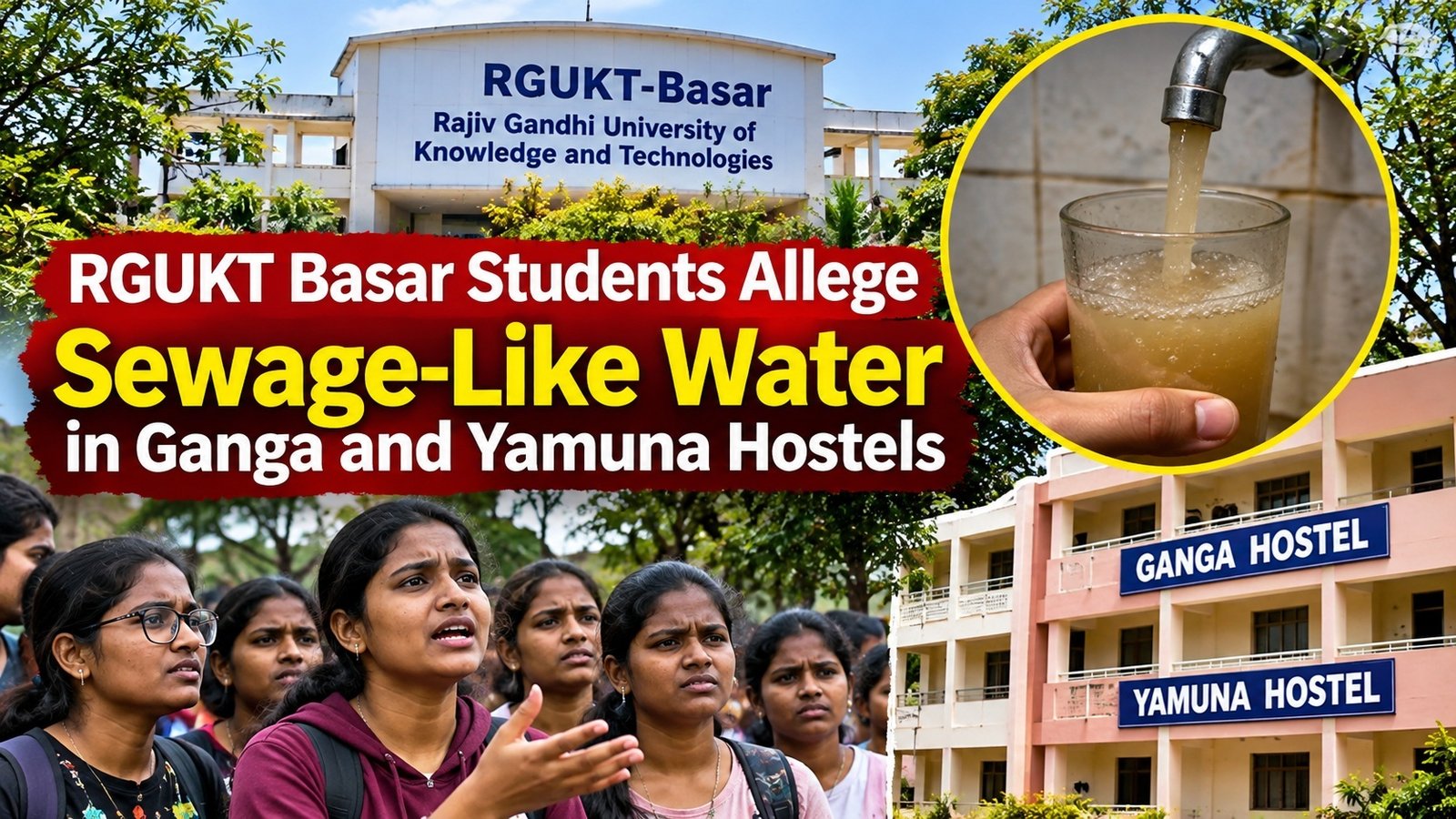
Students at Rajiv Gandhi University of Knowledge Technologies (RGUKT) Basar in Nirmal district, Telangana, allege that authorities compelled them to drink and use murky, sewage-like water from taps in the Ganga and Yamuna hostels. Visuals of discolored water pouring from campus taps spread rapidly on social media on November 10, 2026, sparking widespread concern among students, parents, and the public. Many residents of the women’s hostels report skin-related problems after using the water, while university officials confirm they have sent samples to a laboratory for testing and promise action based on the results.
This incident unfolds against a backdrop of prolonged water scarcity on the campus. Low water levels in the Godavari River, linked to El Niño weather patterns, earlier forced the university to extend Dasara holidays and shift classes online. When students returned, the quality of the available supply became the new flashpoint. What follows is a detailed look at the unfolding situation, its impact on student life, the institutional response, and the larger questions it raises about basic infrastructure at one of Telangana’s key residential technical universities.
Understanding RGUKT Basar and Its Residential Setup
RGUKT Basar, often referred to locally as IIIT Basara, operates as a fully residential institution offering a six-year integrated B.Tech program. Students join after Class 10 and complete a two-year Pre-University Course followed by four years of engineering. The campus houses approximately 9,000 students and around 1,000 staff members across a sprawling site in Nirmal district. Hostels form the core of daily life. Ganga and Yamuna serve as major women’s hostels, while other blocks accommodate male students.
In a residential university of this scale, the administration carries direct responsibility for safe drinking water, sanitation, mess food, and overall living conditions. Students from many parts of Telangana and beyond depend entirely on campus facilities. When those facilities fail, the consequences affect health, academic focus, and willingness to remain on campus. Recent events have brought these vulnerabilities into sharp focus.
How the Water Quality Complaints Emerged
Students from Pre-University Course first and second years began raising alarms about water quality in the days leading up to November 10. They described the water flowing from taps in Ganga and Yamuna hostels as resembling sewage—dark, cloudy, and unfit for drinking or even washing. Videos and photographs showed brownish or murky liquid filling buckets and basins. Students stated they had no alternative and continued using the water despite repeated complaints to hostel and university officials.
Several students reported developing skin infections, rashes, and allergies after contact with the water. Some claimed the same supply reached the mess kitchens, raising fears about food preparation. Separate images circulating online appeared to show worms or foreign matter in mess meals, intensifying suspicions that the water problem extended beyond the hostels into the food chain. Residents said the situation made it difficult to concentrate on studies and left some students reluctant to stay in the hostels.
The complaints did not arise in isolation. The campus had already struggled with quantity. The primary water source is an intake well on the Godavari River constructed around 2010. Under normal conditions the system supplies the roughly 20 lakh litres the campus needs daily. In recent months, river levels dropped sharply because of deficient rainfall associated with El Niño. Only one of three pumping motors remained functional at times, further limiting supply. The campus reservoir fell to critically low levels. University authorities earlier extended the Dasara break and moved classes online to manage the shortage. After representations to the district administration, arrangements were made to draw more Godavari water and classes resumed in person. Students returned only to encounter the quality problem that has now dominated attention.
Health Risks Linked to Contaminated or Substandard Water
Drinking or prolonged contact with untreated or poorly treated water carries well-documented risks. Discolored water can indicate high levels of suspended solids, organic matter, or microbial contamination. Skin infections, dermatitis, and allergic reactions rank among the most immediate concerns when people wash with or bathe in such water. Ingestion raises the possibility of gastrointestinal illness. Although laboratory results remain pending in this case, the students’ reported skin problems align with known effects of contaminated water supplies.
In a dense residential setting the risks multiply. Shared bathrooms, limited private filtration options, and reliance on a single campus network mean problems spread quickly. Young students, many living away from home for the first time, face additional vulnerability. Parents have voiced strong demands for immediate safe water arrangements, reflecting legitimate anxiety about long-term health consequences.
University officials have responded by collecting samples and sending them for laboratory examination. They have stated that action will follow the findings. This step is necessary but not sufficient on its own. Transparent communication of test results, interim supply of packaged or tanker water if needed, and rapid correction of any identified source of contamination will determine whether the administration restores confidence.
Food Safety Concerns Compound the Problem
Parallel complaints about mess food have amplified the crisis. Students allege that worms or similar contaminants appeared in meals and suspect the kitchen uses the same questionable water supply. In any institutional mess serving thousands of students daily, water quality forms a critical control point. Contaminated process water can introduce pathogens or spoil food even when raw ingredients meet standards.
These dual complaints—poor drinking water and suspect food—strike at the heart of student welfare. A residential technical university markets itself as a place where students can focus on academics without worrying about basic needs. When both water and food become sources of anxiety, academic performance and mental well-being inevitably suffer. Students have reported reduced concentration and growing reluctance to remain on campus, outcomes that undermine the very purpose of the institution.
Institutional Response and Administrative Accountability
RGUKT officials have confirmed that water samples went to a laboratory. They have indicated that findings will guide further action. Earlier, the university sought district administration support to improve Godavari water extraction after the shortage became acute. Reports also mention funds sanctioned for additional motors to strengthen the supply system.
These measures address quantity more directly than quality. Students maintain that earlier complaints about dirty water received inadequate attention until videos went viral. Effective campus governance requires proactive monitoring rather than reactive damage control. Regular testing of hostel taps, mess water points, and storage tanks should form part of routine operations, especially during periods of disrupted supply when stagnant conditions or alternative sourcing increase contamination risk.
The district administration’s involvement offers a potential avenue for external oversight. Parents and student representatives have called for the Collector’s intervention to ensure safe water and hygienic conditions. Transparent public updates on test results and corrective steps would help rebuild trust.
Broader Context: Water Scarcity and Educational Campuses in Telangana
The RGUKT Basar episode reflects a wider challenge. Many educational institutions in the region depend on river or groundwater sources vulnerable to seasonal fluctuation and climate variability. El Niño-linked rainfall deficits have strained water systems across Telangana. Residential campuses with large populations face particular pressure because they cannot easily outsource daily water needs.
Past years have seen similar shortages at the Basar campus, including episodes when muddy water arrived from the intake wells. Borewells drilled on campus have often failed to yield reliable volumes. These recurring difficulties point to the need for diversified and resilient water infrastructure—properly maintained treatment plants, adequate storage, backup sources, and rigorous quality protocols.
Student activism has periodically highlighted food quality, medical facilities, and faculty shortages at RGUKT institutions. The current water and hygiene complaints fit into that pattern of demands for better residential facilities. Addressing them effectively requires both immediate fixes and longer-term investment in infrastructure and accountability mechanisms.
Impact on Academic Life and Student Morale
Beyond physical health, the crisis affects the learning environment. Students who worry about the safety of every glass of water or every meal cannot give full attention to lectures and assignments. Those who develop skin conditions face discomfort and potential stigma. The psychological toll of feeling that basic needs go unmet can erode motivation and sense of belonging.
Some students have expressed a desire to leave campus rather than continue under current conditions. For a university that draws students from varied socioeconomic backgrounds, any perception that residential life is unsafe carries reputational costs. Prospective applicants and their families monitor such reports closely. Maintaining high standards of campus living is therefore both a welfare obligation and a strategic necessity.
Steps Toward Resolution and Prevention
Several practical measures can help resolve the immediate situation and reduce future risk:
- Expedite laboratory analysis of water samples and publish results promptly.
- Arrange temporary safe drinking water through tankers or packaged supply while permanent corrections take place.
- Inspect and, if necessary, clean or repair the entire distribution network serving Ganga, Yamuna, and other hostels.
- Verify that mess kitchens use only treated water and strengthen food safety audits.
- Establish a transparent grievance mechanism with clear timelines for response.
- Conduct regular independent water quality testing and share summary data with the student community.
- Accelerate infrastructure upgrades, including reliable pumping capacity, treatment facilities, and storage that can handle seasonal shortfalls.
- Engage student representatives and parent groups in monitoring progress.
District authorities and the state higher education department also have roles. Ensuring that residential universities meet minimum standards for water and sanitation protects both students and the public investment in these institutions.
The Human Cost of Infrastructure Gaps
At its core, this story is about young people trying to pursue education under difficult living conditions. Many RGUKT students come from families that view the residential program as a pathway to better opportunities. When the campus fails to provide safe water, it places an unfair additional burden on those students. Skin infections, anxiety about food, and the stress of repeated complaints divert energy that should go into learning.
University leaders, hostel wardens, and administrative staff operate under real constraints, including fluctuating river levels and aging infrastructure. Yet the responsibility to prioritize student safety remains clear. Prompt, transparent, and effective action can turn the current controversy into an opportunity to strengthen systems that protect residents in the years ahead.
Looking Ahead: Building Resilience at RGUKT Basar
The laboratory results will clarify the precise nature of the water quality problem. Whatever the findings, the episode has already highlighted vulnerabilities in supply, treatment, distribution, and grievance redressal. Addressing those vulnerabilities requires sustained attention rather than one-time fixes.
Climate patterns that reduce river flows are likely to recur. Campuses that depend heavily on single sources need redundancy and robust treatment capacity. Regular maintenance of intake wells, motors, pipelines, and storage tanks is essential. Equally important is a culture of responsiveness in which student complaints trigger timely investigation rather than delayed reaction after social media amplification.
Parents, students, alumni, and civil society can play constructive roles by continuing to demand accountability while recognizing the complexity of managing large residential campuses. Media coverage that focuses on verified facts and follows up on promised actions also contributes to better outcomes.
RGUKT Basar has the potential to serve as a model residential technical university. Realizing that potential depends in part on getting the fundamentals right—safe water, hygienic food, and living conditions that allow students to thrive. The current allegations of sewage-like water in Ganga and Yamuna hostels have exposed gaps that demand urgent and lasting attention. How the university and supporting authorities respond in the coming days and weeks will shape both student well-being and public confidence in the institution.
The students who raised their voices have performed a public service by bringing the issue into the open. Their health and education should now stand at the center of every remedial step. Safe water is not a luxury in a residential university; it is a basic right that underpins everything else the campus seeks to achieve
