
 By
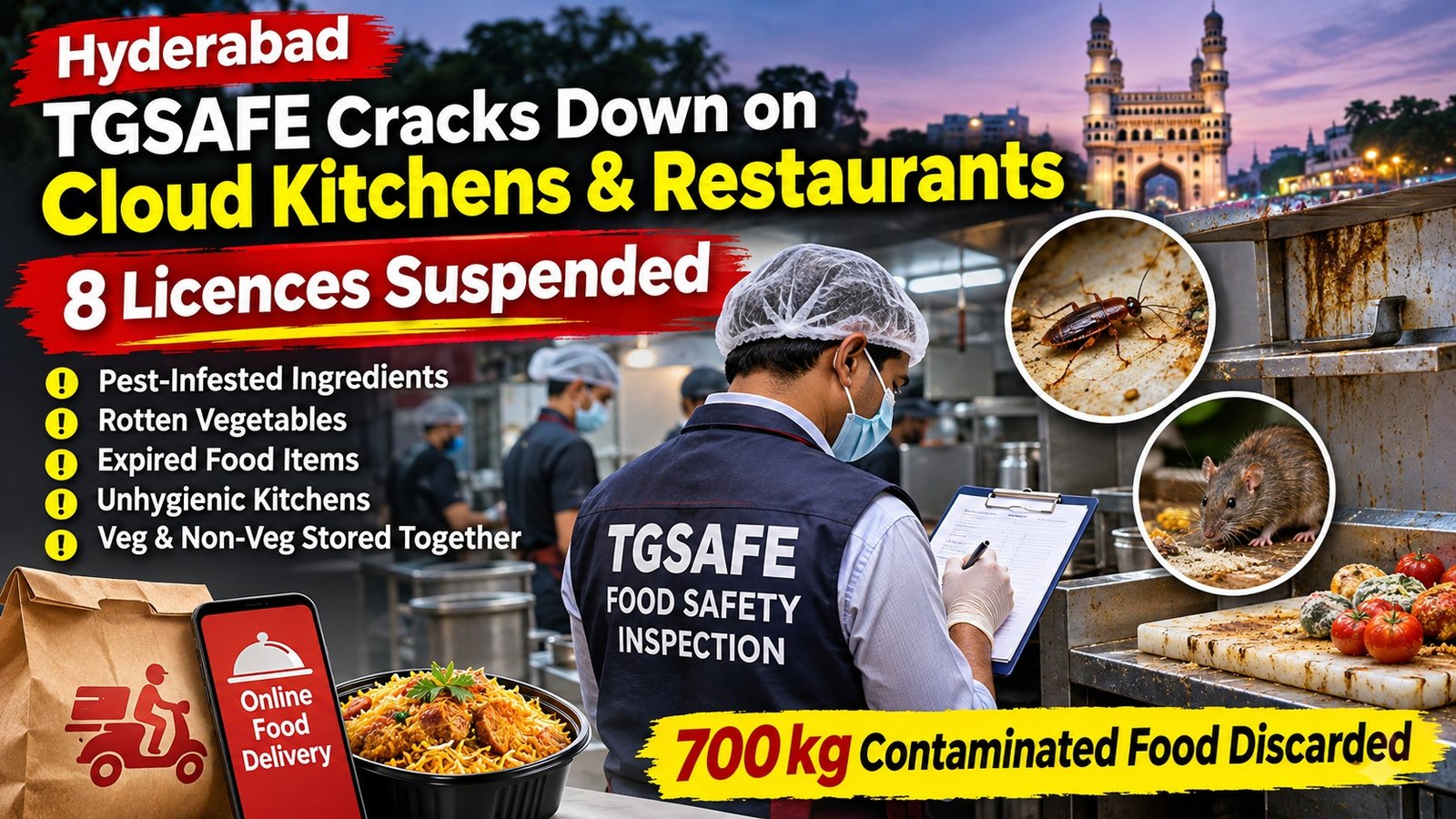
Online food delivery has become a daily habit for thousands of people across Hyderabad. You open an app, place an order for biryani, kulcha or multi-cuisine meals, and expect a clean, safe meal to arrive at your door. Yet recent inspections by the Telangana Standards Authority for Food and Essential Drugs, popularly known as TGSAFE, have revealed that several cloud kitchens and restaurants supplying these orders operated in shocking conditions. On November 10, officials suspended the food safety licences of eight establishments and forced them to shut operations immediately. Most of these units stood in the busy tech and residential corridors of Gachibowli, Kondapur, Madhapur and Khairatabad.
The special enforcement drive covered 23 cloud kitchens and restaurants. Inspectors found everything from pest-infested ingredients and rotten vegetables to food handlers working without basic protective gear. Vegetarian and non-vegetarian items sat side by side in freezers. Cockroaches crawled across preparation areas. Rat droppings appeared in storerooms. Authorities discarded nearly 700 kg of spoiled and contaminated food and collected 25 samples for further testing. Ten other outlets received show-cause notices, while five more face improvement notices and future rechecks.
This article examines the full list of violations, the establishments involved, the broader risks of poorly regulated cloud kitchens, and practical steps consumers can take to stay safe. It also explores why food safety enforcement matters more than ever in a city that relies heavily on delivery platforms.
Why Cloud Kitchens Attract Intense Scrutiny in Hyderabad
Cloud kitchens, also called ghost kitchens or dark kitchens, prepare food exclusively for delivery. They often operate without a customer-facing dining area, which reduces costs but can also reduce visible accountability. In Hyderabad’s fast-growing IT corridors—Gachibowli, Kondapur, Madhapur and nearby areas—dozens of such kitchens supply popular brands. High order volumes and competition push some operators to cut corners on hygiene, storage and staff training.
TGSAFE’s November 10 drive targeted exactly these pressures. Twenty-four teams of food safety officers worked alongside Hyderabad city police personnel. They checked kitchens during active operations, examined storage areas, tested equipment and observed staff practices. The findings paint a clear picture: several high-profile and lesser-known outlets failed basic food safety standards.
Violations fell into consistent patterns. Food handlers frequently worked without hairnets or aprons. Floors, walls and chimneys carried grease and dirt. Drains stayed clogged. Freezers mixed vegetarian and non-vegetarian items. Expired products remained on shelves. Most alarmingly, inspectors documented live cockroach infestations, rat droppings and spoiled ingredients ready for use.
These conditions do more than create an unpleasant kitchen. They raise real risks of foodborne illness. Contaminated food can carry bacteria, allergens or physical contaminants that reach customers who never see the kitchen. When licences get suspended, the message is direct: operators must fix the problems or stay closed.
Detailed Look at the Eight Establishments That Lost Their Licences
TGSAFE suspended licences for eight cloud kitchens and restaurants after documenting serious lapses. Each case showed multiple failures that left little room for immediate compliance. Here is a clear breakdown of what inspectors found at each site.
Biryani By Kilo in Gachibowli
Inspectors discovered spoiled rice on the premises and wheat flour already infested with pests. Cockroaches were present. Kitchen equipment showed rust and poor cleaning. Vegetarian and non-vegetarian foods shared the same freezer space. These combined issues led to immediate suspension.
Kulcha Kulture in Madhapur
Rat droppings indicated an active rodent problem. Stoves remained dirty. Expired food articles sat on shelves. Potatoes showed clear bite marks from rats. The combination of pest evidence and expired stock forced the licence suspension.
Lucky Multicuisine Restaurant in Somajiguda
A live cockroach infestation occupied the store room. Staff stored vegetarian and non-vegetarian items together. Inspectors found expired curd and ragi flour. Open dustbins, black smoke buildup on the chimney, kitchen roof and exhaust, plus overall unhygienic storeroom conditions completed the list of failures.
Tum Yum Innovisions in Madhapur
The kitchen itself was unclean. Cockroach infestation and rat droppings appeared throughout. Rotten potatoes remained in stock. Clogged drains added to the sanitation problems. Officials suspended the licence without delay.
Zora 11 By 2 in Khairatabad
Cockroaches occupied both the food preparation area and the storeroom. The presence of pests in active cooking zones made continued operation unacceptable.
LO Fresh Foods in Ayyappa Society, Madhapur
Food handlers worked without hairnets or aprons. Refrigerators were unclean. Floors were greasy and walls and corners unhygienic. Staff failed to segregate vegetarian and non-vegetarian food in refrigerators. Expired food articles remained on site.
ITC Aashirwad Soul Creations Cloud Kitchen in Gachibowli
Food trays were unclean. Freezers leaked water. Chopping boards showed corrosion. Stoves and chimneys carried heavy grease. Spoiled and expired food articles were present, along with a cockroach infestation.
Sodexo India Services in Kondapur
Stoves were greasy with accumulated food residues. Extraneous matter appeared in rice flour. Milk leakage on storage racks created contamination risks. Water leaked in the dry storeroom. Ginger-garlic paste lacked proper labelling and showed an unidentified external liquid. Kitchen drainage gaps were clogged. The vegetable chiller stayed unhygienic with wet floors and leftover leafy remains. Spoiled and decomposed vegetables completed the violations.
These eight outlets must stop all food preparation and sale until they receive fresh clearance. The suspensions protect consumers while giving operators a clear incentive to overhaul their facilities and processes.
Show-Cause Notices Issued to Ten Additional Establishments
Beyond the full suspensions, TGSAFE issued show-cause notices to ten more kitchens and restaurants. These notices require the operators to explain the serious violations found during inspection and to show why further penalties should not apply. The list includes:
- Prism Hospitality Services Pvt Ltd in Miyapur
- Ghar the Cloud Kitchen in Kokapet
- Rebel Foods (Behrouz and Faasos) in Serilingampally
- Rebel Foods Pvt Ltd in Shaikpet
- Curefoods India Pvt Ltd in Kompally
- Scuzi Hospitality Pvt Ltd in Madhapur
- Sri Kakatiya Deluxe Mess in Ameerpet
- FA Gifts Pvt Ltd in Gachibowli
- ELIOR India Food Services LLP in Gopanpally
- Potful India Pvt Ltd in Madhapur
Officials have indicated that further action, including possible penalties, will follow based on the responses and any additional evidence. Several of these names belong to larger food-service groups that supply multiple delivery brands. The notices therefore carry wider implications for brand reputation and platform partnerships.
Improvement Notices and the Path to Compliance
Five establishments received or will receive improvement notices. These notices order the operators to correct specific lapses and prepare for reinspection. The list covers:
- AVA Cloud Kitchens in Lingampally
- Harley’s India Pvt Ltd in Pragathi Nagar
- Hunger Experiment Pvt Ltd in Madhapur
- Fruitique in Kompally
- Rebel Foods Pvt Ltd (Behrouz Biryani) in Sundar Nagar, Khairatabad
Officials will return to verify that the problems have been fixed. Successful compliance can allow continued operation. Failure may lead to stronger measures. This staged approach gives businesses a chance to improve while still protecting public health.
Scale of the Enforcement Drive and Immediate Results
The November 10 action involved 24 coordinated teams. Together they inspected 23 sites, collected 25 food samples suspected of adulteration, and discarded approximately 700 kg of spoiled or contaminated food. Additional common problems appeared across many locations: damaged flooring, food waste scattered in kitchens, unclean washing areas, clogged drains, dirty walls, greasy exhaust systems, and staff working without protective equipment.
These numbers show both the thoroughness of the drive and the volume of risk that existed in the inspected kitchens. Discarding 700 kg of food removes immediate hazards. Sample testing will help determine whether chemical or biological adulteration also occurred. Reinspections and proceedings against the show-cause cases will shape the next phase of enforcement.
Understanding the Real Risks of Contaminated Cloud Kitchen Food
When a cloud kitchen fails basic hygiene standards, the consequences travel straight to the customer. Pest infestations introduce bacteria and physical contaminants. Mixing vegetarian and non-vegetarian items risks cross-contamination that affects dietary and religious preferences. Expired or spoiled ingredients can cause food poisoning. Greasy equipment and clogged drains create environments where pathogens thrive.
Hyderabad’s delivery-dependent population—office workers, students and families—places high trust in the platforms and brands that appear on their screens. Most customers never visit the kitchen. They rely on the food safety licence and the assumption that regulators monitor compliance. When that system reveals widespread failures, trust erodes quickly.
Repeated incidents also damage the reputation of the broader cloud kitchen model. Legitimate operators who invest in clean facilities and trained staff suffer when high-profile suspensions dominate headlines. Platforms that list these kitchens face pressure to strengthen their own quality checks. Consumers begin to question every order.
How Food Safety Rules Apply to Cloud Kitchens in Telangana
Food businesses in Telangana, including cloud kitchens, must hold a valid food safety licence issued under the Food Safety and Standards Act. The licence requires compliance with hygiene, storage, labelling and staff practices. Regular inspections, complaint-based checks and special drives such as the one on November 10 enforce these rules.
Key expectations include:
- Clean, pest-free premises
- Proper segregation of vegetarian and non-vegetarian foods
- Use of protective clothing by food handlers
- Functional drainage and exhaust systems
- Safe storage temperatures and clear labelling
- Absence of expired or spoiled ingredients
Failure to meet these standards can lead to improvement notices, show-cause notices, licence suspension or cancellation, and monetary penalties. In serious cases, authorities can initiate criminal proceedings. The November drive demonstrates that TGSAFE is willing to act decisively when inspections uncover clear dangers.
Practical Advice for Consumers Ordering Food Online in Hyderabad
Consumers can take simple steps to reduce risk while regulators continue their work.
Check the rating and recent reviews on delivery apps. Sudden drops in ratings or clusters of complaints about taste, smell or packaging often signal deeper problems. Prefer brands that publish information about their kitchen standards or that operate visible restaurants in addition to cloud kitchens. When possible, choose outlets with recent positive mentions of cleanliness.
Pay attention to packaging upon delivery. Leaking containers, unusual odours or visible foreign matter are reasons to reject the order and report the issue to both the platform and food safety authorities. Keep records of order details if you later need to file a complaint.
Support transparent operators. Businesses that invest in open kitchens, staff training and regular third-party audits deserve preference. Over time, consumer choices help shift the market toward higher standards.
If you experience illness after eating delivered food, seek medical attention and report the incident promptly. Accurate reporting helps authorities identify problem kitchens faster.
Broader Implications for the Food Delivery Ecosystem
The suspensions and notices issued on November 10 send a clear signal across Hyderabad’s food delivery landscape. Large multi-brand operators and smaller independent kitchens both appear on the lists. This suggests that scale alone does not guarantee compliance. Investment in infrastructure, staff training and daily hygiene routines remains essential.
Delivery platforms also carry responsibility. They decide which kitchens appear on their apps and how quickly they respond to safety complaints. Stronger platform-level audits, temporary delisting of suspended kitchens, and clearer communication with customers can reinforce regulatory action.
Local authorities benefit from sustained pressure. One-day drives create headlines, but consistent follow-up inspections and transparent publication of results build long-term deterrence. Public reporting of compliance status helps consumers make informed choices and rewards operators who maintain high standards.
The Human Cost of Poor Kitchen Hygiene
Behind every suspension lies a set of real risks to public health. Foodborne illnesses can range from mild discomfort to severe cases requiring hospitalisation, especially among children, the elderly and people with compromised immunity. Cross-contamination of vegetarian and non-vegetarian foods can violate personal and religious dietary rules. The presence of pests and spoiled ingredients creates an environment where pathogens multiply rapidly.
Staff who work in unclean conditions also face health risks. Protective equipment exists for a reason. When kitchens ignore basic standards, both workers and customers pay the price.
What Happens Next After the November Inspections
TGSAFE has stated that further action will follow the findings of reinspections and the proceedings against establishments that received show-cause notices. The five locations under improvement notices will face verification visits. The ten outlets with show-cause notices must respond formally. The eight suspended kitchens remain closed until they demonstrate full compliance and regain their licences.
Authorities may expand future drives to additional areas or focus on specific high-risk categories such as multi-brand cloud kitchens. Sample test results from the 25 collected items will determine whether additional penalties or legal steps are required.
Building a Safer Food Delivery Culture in Hyderabad
Sustainable improvement requires more than occasional crackdowns. Operators need clear, practical guidance on daily hygiene practices. Training programmes for food handlers, better access to pest-control services, and incentives for transparent reporting can raise the baseline. Platforms can share anonymised data on complaint patterns so that regulators target high-risk locations more efficiently.
Consumers play a role by choosing carefully and reporting problems. Media coverage that focuses on verified facts rather than sensationalism helps maintain public attention without creating unnecessary panic. Together these elements create an environment where clean, safe kitchens become the expected norm rather than the exception.
Final Thoughts on Food Safety Accountability
The November 10 enforcement drive by TGSAFE exposed serious hygiene failures across multiple cloud kitchens and restaurants in Hyderabad. Eight licences were suspended, ten show-cause notices issued, and five improvement notices prepared. Nearly 700 kg of contaminated food left the system. These actions protect consumers and remind the industry that licences are privileges that require continuous compliance.
As Hyderabad continues to grow as a technology and lifestyle hub, demand for reliable food delivery will only increase. Meeting that demand safely requires consistent attention from operators, platforms and regulators. The kitchens that treat hygiene as a core business practice will thrive. Those that treat it as an afterthought will face repeated scrutiny and loss of public trust.
Consumers who stay informed, platforms that enforce quality, and authorities that follow through on inspections together form the strongest defence against the risks revealed in this drive. Clean kitchens are not optional. They are the foundation of every order that reaches a customer’s table.