

 By
Introduction
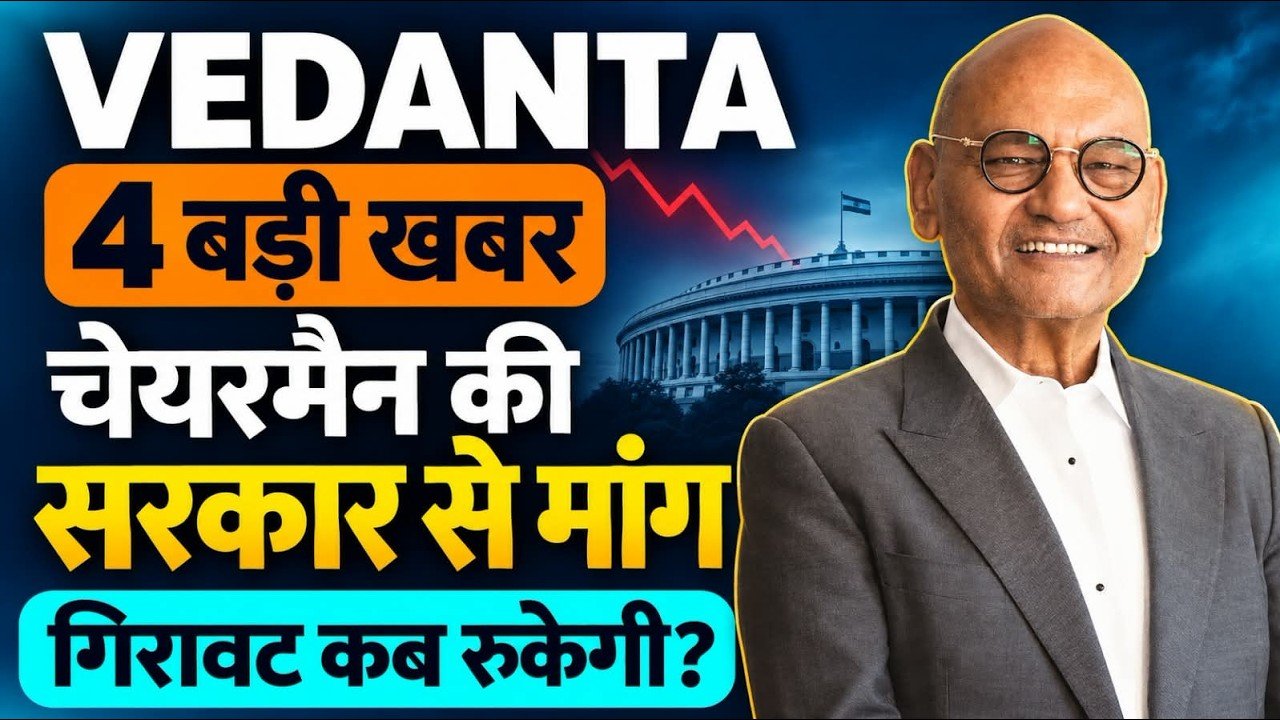
Why Is Vedanta Stock Falling and When Could the Decline Stop?
Vedanta shares have remained under pressure as weakness across the global metals market, concerns about industrial demand and profit-booking weigh on investor sentiment. The recent decline has affected several businesses associated with the Vedanta Group, including aluminium, power, oil and gas, and iron and steel.
The latest developments present a mixed picture for investors. On one side, falling copper, zinc and steel prices have raised concerns about earnings growth for metal producers. Brokerage firm Systematix has identified Vedanta, Hindustan Zinc and Hindustan Copper among the companies exposed to this pressure. On the other side, aluminium manufacturers are requesting the government to remove import duties on primary aluminium in the Union Budget 2027–28.
Vedanta Power has also launched a campaign in Punjab to encourage farmers to use agricultural waste as a source of energy instead of burning it. Meanwhile, Vedanta Group Chairman Anil Agarwal has called for greater private-sector participation in mineral exploration, including iron ore.
These developments could influence investor sentiment, but they do not automatically indicate an immediate recovery in Vedanta shares. The important question is whether the company’s earnings outlook, commodity prices and broader market conditions will improve enough to support a sustained upward trend.
This article examines the latest Vedanta share news, reported stock prices, Systematix’s metal-sector outlook, the aluminium industry’s budget demand and the company’s latest business initiatives.
Vedanta Share Price Today: Latest Stock Performance
Vedanta shares experienced another weak trading session as selling pressure affected the broader market and metal stocks.
According to market data for November 23, 2026, Vedanta Limited closed at approximately ₹235.53, declining around 1.05% during the session. The stock opened at ₹239.51 and moved between an intraday high of ₹239.51 and a low of ₹233.80.
The decline reflects continued pressure on the stock after a period of weakness in the metals sector. https://www.business-standard.com/markets/vedanta-ltd-share-price-502.html
The video transcript also discusses the performance of the separately listed Vedanta Group businesses. Its reported closing prices are broadly consistent with available market data, although investors should distinguish the different listed companies rather than treating them as one stock.
Reported Performance of Vedanta Group Stocks
| Listed company | Reported closing price | Reported daily change |
|---|---|---|
| Vedanta Limited | ₹235.53 | -1.05% |
| Vedanta Aluminium Metal | ₹361.25 | -1.18% |
| Vedanta Power | Around ₹33.50 | -3.46% |
| Vedanta Oil and Gas | ₹29.17 | Around -0.07% |
| Vedanta Iron and Steel | Around ₹23.30 | -2.43% |
Prices and percentage changes are based on the video transcript and available market information for the relevant trading session. Confirm individual exchange records before publishing or using these figures for trading decisions.
Why Did Vedanta Shares Fall?
The decline cannot be attributed to one development alone. Several factors may be influencing the stock:
- Weakness in international metal prices.
- Concerns about slower industrial demand, particularly in China.
- Falling copper, zinc and steel prices.
- A stronger US dollar and changing expectations about interest rates.
- Profit-booking across the broader Indian equity market.
- Concerns about the earnings outlook for metal-producing companies.
The market is also reassessing the outlook for companies that benefited from the earlier rise in commodity prices. When metal prices fall, investors may lower their expectations for future revenue and profit growth.
For Vedanta, which operates across several natural-resource businesses, commodity-price movements are particularly important.
Systematix Report on Metal Stocks: Why Is Vedanta Facing Earnings Pressure?
One of the most important developments discussed in the video is the latest metal-sector assessment from Systematix Institutional Equities.
The brokerage has highlighted the possible impact of declining global metal prices on Indian companies. Its assessment suggests that lower commodity prices could benefit manufacturers that use metals as raw materials while creating earnings risks for companies that produce those metals.
This distinction is important when analysing the current weakness in Vedanta shares.
Falling Copper, Zinc and Steel Prices
According to the Systematix assessment reported on November 23, 2026, copper, zinc and steel prices have experienced significant corrections.
The reported declines are:
- Copper: approximately 16%.
- Zinc: approximately 21%.
- Steel: approximately 5%.
These figures indicate the scale of the commodity-price correction discussed in the brokerage’s assessment. https://www.businesstoday.in/markets/stocks/story/vedanta-hindzinc-bajaj-auto-eicher-motors-voltas-impact-of-global-metal-price-crash-569044-2026-11-23
Lower prices can create different outcomes for different businesses. Companies purchasing metals for manufacturing may benefit from reduced input costs. However, producers that depend on selling metals at favourable prices could experience pressure on revenue and profitability.
Why Are Metal Producers More Vulnerable?
Metal-producing companies are exposed to fluctuations in international commodity prices.
Their profitability depends on several factors, including:
- The selling price of the metal.
- The cost of mining and processing.
- Energy and transportation expenses.
- Production volumes.
- Demand from domestic and international customers.
- Currency movements and global trade conditions.
When selling prices decline faster than production costs, operating margins can come under pressure.
For example, a zinc producer may continue operating its mines and processing facilities at similar costs, but lower zinc prices could reduce the revenue generated from each tonne sold.
The same general principle applies to copper, aluminium and steel businesses, although the exact financial impact differs by company and product.
Systematix Identifies Vedanta, Hindustan Zinc and Hindustan Copper as Risk Stocks
The brokerage’s assessment identifies three metal producers that could face earnings pressure from the commodity correction:
- Vedanta
- Hindustan Zinc
- Hindustan Copper
These companies are exposed to non-ferrous metal prices, including zinc and copper, and their earnings can be sensitive to changes in commodity markets.
For Vedanta, the concern is especially relevant because the group has a diversified metals and natural-resources portfolio. A decline in one commodity may be partly offset by performance in another business, but broad weakness across multiple metals can create a more challenging operating environment.
The Systematix view should be understood as an assessment of earnings risk, not a prediction that these shares must continue falling or that their businesses are fundamentally unviable.
Why Are Global Metal Prices Falling?
The international commodity market has faced several sources of pressure. The video highlights the US dollar, inflation expectations, Federal Reserve commentary and weaker Chinese industrial activity.
These factors are relevant because metals are traded in international markets and demand depends heavily on manufacturing, infrastructure and construction.
Stronger US Dollar and Interest-Rate Expectations
A stronger US dollar can put pressure on internationally traded commodities.
When the dollar appreciates, metals priced in dollars can become more expensive for buyers using other currencies. This may affect purchasing decisions and reduce demand in some markets.
Interest-rate expectations also influence commodity sentiment. If investors believe US interest rates will remain elevated for longer, they may become more cautious about assets that depend on strong economic growth.
Higher borrowing costs can affect industrial investment, construction activity and manufacturing demand.
Weak Industrial Activity in China
China is one of the world’s most important consumers of industrial metals.
Its construction, manufacturing, infrastructure and industrial sectors influence demand for commodities such as copper, zinc, aluminium and steel.
When Chinese industrial activity slows, investors may become concerned about future metal consumption.
The latest market assessment discussed by Systematix points to weaker industrial indicators, softer investment activity and reduced steel production as contributing factors.
Lower demand expectations can affect commodity prices even before the full impact becomes visible in company earnings.
Rising Inventories and Profit-Booking
Commodity prices can also decline when inventories increase or market participants begin booking profits after a strong rally.
If traders expect supply to remain high while demand weakens, they may reduce their positions in metal futures and related investments.
This can intensify short-term price movements.
The combination of weaker demand expectations, inventory concerns and profit-booking has contributed to the negative sentiment surrounding several metal stocks.
Which Indian Stocks Could Benefit From Falling Metal Prices?
Although lower metal prices are creating challenges for producers, they can benefit companies that use metals in their manufacturing processes.
Systematix has expressed a more constructive view on selected automobile and consumer durable companies.
Consumer Durable Companies
Consumer durable manufacturers use metals such as copper, aluminium and steel in products including air conditioners, refrigerators, washing machines and electrical equipment.
When the prices of these materials decline, manufacturers may experience lower input costs.
If selling prices remain relatively stable, lower raw-material expenses can improve operating margins.
Systematix’s preferred consumer durable names include:
- Voltas
- Blue Star
- Havells India
- Crompton Greaves Consumer
The brokerage has highlighted the sensitivity of consumer durable earnings to changes in metal prices. It has also pointed to valuation considerations in the sector.
However, lower raw-material costs do not guarantee higher profits. Companies must also manage competition, demand, distribution expenses, product pricing and inventory costs.
Automobile Companies
Automobile manufacturers also consume substantial quantities of metals.
Copper is used in electrical systems and vehicle components, while aluminium and steel are important materials in vehicle structures and manufacturing.
Lower commodity prices could therefore provide cost relief to selected automobile companies.
Systematix’s preferred automobile names include:
- Bajaj Auto
- TVS Motor
- Eicher Motors
- Hyundai Motor India
- Tata Motors
Two-wheeler manufacturers may be particularly sensitive to changes in aluminium and copper costs, according to the brokerage’s assessment.
The actual benefit will depend on procurement arrangements, inventory cycles, pricing decisions and the extent to which lower material costs are passed on to customers.
Producer Versus Consumer: Understanding the Difference
The current market environment highlights an important distinction between metal producers and metal-consuming manufacturers.
| Business category | Possible impact of falling metal prices |
|---|---|
| Metal producers | Lower selling prices may reduce revenue and earnings |
| Automobile manufacturers | Lower input costs may support margins |
| Consumer durable companies | Reduced material expenses may improve profitability |
| Metal-processing businesses | Impact depends on selling prices and raw-material costs |
This explains why some automobile and consumer durable shares may attract investor interest while metal producers face greater uncertainty.
Aluminium Industry Requests Zero Import Duty in Union Budget 2027–28
Another important development concerns the aluminium industry.
The Aluminium Extrusion Manufacturers Association of India (ALEMAI) has requested the government to reduce the basic customs duty on primary aluminium imports from 7.5% to zero in the Union Budget 2027–28.
The association has submitted its request to Finance Minister Nirmala Sitharaman, arguing that the existing duty structure increases raw-material costs for downstream manufacturers.
The request has brought companies such as Vedanta, Hindalco and National Aluminium Company into focus. https://www.business-standard.com/industry/news/aluminium-product-makers-seek-zero-import-duty-on-raw-metal-ahead-of-budget-126112200167_1.html
What Is the Current Aluminium Import Duty?
According to the industry representation, primary aluminium currently attracts a basic customs duty of 7.5%.
Including the social welfare surcharge, the effective import duty is approximately 8.25%.
ALEMAI wants the basic customs duty reduced to zero.
The association believes that this could reduce raw-material costs for manufacturers that purchase primary aluminium to produce finished and semi-finished products.
Why Does the Aluminium Industry Want Duty Relief?
Downstream manufacturers use primary aluminium to manufacture products such as:
- Aluminium extrusions.
- Industrial components.
- Electrical products.
- Construction materials.
- Aluminium-based consumer goods.
- Other processed aluminium products.
The association argues that higher raw-material costs make it difficult for domestic manufacturers, particularly MSMEs, to compete with imported finished and semi-finished products.
Reducing the import duty could help lower input costs and improve the competitiveness of downstream businesses.
Could Zero Import Duty Benefit Vedanta?
The potential impact on Vedanta needs careful analysis.
Vedanta is a major aluminium producer, whereas ALEMAI represents downstream manufacturers seeking lower-cost primary aluminium imports.
If the government accepts the proposal, downstream manufacturers could benefit from lower input costs. However, the effect on domestic primary aluminium producers may be more complicated.
Domestic aluminium prices are influenced by international prices and import-parity considerations. Lower import duties could change competitive conditions and pricing dynamics.
Therefore, it would be inaccurate to assume that removing the duty will automatically increase Vedanta’s profits.
The outcome will depend on the final government decision, domestic and international aluminium prices, supply-demand conditions and the company’s production economics.
For investors, the key point is that the proposal remains an industry request. It is not a confirmed government policy decision.
Vedanta Power Launches ‘Aapki Parali Banegi Punjab Ki Power’ Campaign
Vedanta Power has announced a campaign in Punjab to encourage farmers to use paddy straw productively instead of burning it in agricultural fields.
The campaign is titled ‘Aapki Parali Banegi Punjab Ki Power’, which means ‘Your stubble will become Punjab’s power’.
The initiative aims to promote the use of agricultural residue as a resource for energy generation and other industrial applications.
The campaign was reported in November 2026 and is intended to bring together farmers, biomass processors, manufacturers, entrepreneurs, research institutions and potential buyers. https://timesofindia.indiatimes.com/city/chandigarh/now-parali-to-power-campaign-in-punjab/articleshow/135939464.cms
Why Is Paddy Straw Important?
After harvesting paddy, farmers are left with agricultural residue known as stubble or parali.
In some areas, farmers burn this residue to clear their fields for the next crop. Open-field burning contributes to air pollution and creates environmental concerns, particularly in northern India.
However, paddy straw can be used in several industries if it is collected, processed and transported properly.
Potential applications include:
- Biomass-based electricity generation.
- Paper and paperboard manufacturing.
- Packaging products.
- Biofuels and bio-CNG.
- Moulded-fibre products.
- Animal fodder, where suitable.
The campaign seeks to encourage farmers to consider agricultural waste as an economic resource rather than simply burning it.
How Can Biomass Support Vedanta Power?
Thermal power plants can use processed biomass alongside conventional fuel, subject to technical requirements and operational arrangements.
Agricultural residue can be converted into suitable fuel products through processing and pelletisation.
These products can then be supplied to industrial facilities that are equipped to use biomass.
The Times of India report states that the Talwandi Sabo thermal power plant used approximately 3.60 lakh metric tonnes of biomass during FY2025–26, compared with 26,099 metric tonnes during FY2024–25.
Biomass accounted for around 5.21% of the plant’s total fuel consumption in FY2025–26, according to the report.
The initiative demonstrates how agricultural waste can become part of an industrial supply chain.
Benefits for Farmers and the Environment
The campaign could create opportunities for farmers if reliable collection and purchasing arrangements are developed.
Potential benefits include:
- Additional income from agricultural residue.
- Reduced dependence on open-field stubble burning.
- New opportunities for biomass processing businesses.
- Greater use of agricultural waste in energy production.
- Potential improvements in air quality.
However, the success of the programme will depend on collection infrastructure, transportation costs, processing capacity and the prices offered to farmers.
The initiative is a positive operational and environmental development, but investors should not assume that it will immediately produce a material improvement in Vedanta Power’s financial results.
Anil Agarwal Calls for Greater Private Participation in Iron Ore Exploration
Another important development concerns mineral exploration in India.
Vedanta Group Chairman Anil Agarwal has suggested that the government should encourage greater participation from private companies in mineral exploration, including iron ore.
His argument is that private investment, new technologies and start-up participation could help strengthen the country’s mineral-development ecosystem.
The proposal is based on the view that exploration should not depend exclusively on public-sector companies.
Why Is Private Participation Important?
Mineral exploration requires capital, technical expertise, geological research and long-term investment.
Greater private participation could potentially help:
- Increase exploration activity.
- Introduce new technologies.
- Improve geological data collection.
- Encourage investment in mineral development.
- Support the discovery of new mineral resources.
- Strengthen domestic raw-material availability.
Start-ups could also play a role by developing technologies that make exploration more efficient.
Could This Support Vedanta’s Long-Term Business?
Greater private-sector participation could create opportunities for companies involved in mining and mineral development.
However, the proposal is a policy suggestion rather than confirmation of a new government scheme or an immediate financial benefit for Vedanta.
Any eventual impact would depend on government regulations, exploration permissions, commercial arrangements and the availability of economically viable mineral deposits.
For long-term investors, the development is worth monitoring, but it should not be treated as a short-term share-price trigger.
Vedanta Group Employee Salary Increase: What Does It Mean?
The video also refers to an increase in employee salaries.
Employee compensation is an important part of managing a large industrial group. Skilled employees are essential for mining, manufacturing, power generation, maintenance, safety and operational management.
Salary revisions can support employee retention and workforce stability.
However, an increase in salaries can also affect operating expenses.
To assess the financial significance of this development, investors would need details such as:
- The number of employees receiving salary increases.
- The average percentage increase.
- The total additional annual employee cost.
- Whether the increase is linked to productivity or business expansion.
The transcript does not provide these figures. Therefore, the salary revision should be treated as a general company update rather than a quantified earnings development.
When Will Vedanta Shares Stop Falling?
This is the central question for investors following Vedanta share news.
There is no reliable way to identify an exact date when a falling stock will stop declining. A sustainable recovery generally requires improvements in several areas rather than a single positive announcement.
For Vedanta, the following factors deserve attention.
1. Stabilisation in Global Metal Prices
The first important factor is the direction of international metal prices.
If copper, zinc, aluminium and steel prices stabilise, investors may become more confident about the earnings outlook for metal producers.
However, a temporary price recovery may not be enough. The market will want to see whether commodity prices can maintain their strength.
2. Improvement in Chinese Industrial Demand
China’s industrial activity is an important influence on global metal demand.
Stronger manufacturing, construction and infrastructure activity could improve commodity sentiment.
If Chinese demand remains weak, metal prices may continue to face pressure.
3. Better Quarterly Financial Performance
Investors should monitor Vedanta’s revenue, operating profit, margins, production volumes and cash flows.
A company can experience share-price weakness even when its operations remain active. What matters is whether its financial performance meets or exceeds market expectations.
Improving operating margins and stable cash generation could support investor confidence.
4. Broader Market Recovery
The video also highlights weakness in the broader Indian stock market.
When investors engage in widespread profit-booking, individual stocks can fall even without company-specific negative announcements.
A recovery in market sentiment could help reduce selling pressure across several sectors.
5. Developments in the Aluminium Sector
The government’s response to the industry’s request for zero basic customs duty on primary aluminium will be worth watching.
The final decision could influence raw-material costs and competitive conditions across the aluminium value chain.
Investors should examine the actual policy announcement rather than trading only on expectations.
6. Performance of Individual Vedanta Businesses
Vedanta operates across multiple natural-resource and industrial businesses.
Investors should separately monitor the performance of its aluminium, zinc, oil and gas, power and iron and steel operations.
A diversified business portfolio can provide different sources of revenue, but it also exposes the company to several commodity cycles.
A recovery in one segment may not completely offset weakness in another.
Important Levels and Technical Analysis: What Should Investors Watch?
The transcript mentions several recent trading levels, including Vedanta Limited’s intraday low of ₹233 and the reported 52-week range of some separately listed group companies.
These prices can help describe recent market activity, but they should not automatically be treated as confirmed support or resistance levels.
For technical analysis, investors should examine:
- Recent swing highs and lows.
- Daily and weekly closing prices.
- Trading volume during declines and recoveries.
- Moving averages.
- Relative strength compared with the Nifty and metal-sector indices.
- Whether the stock forms higher lows after a decline.
A stock moving above an intraday level does not necessarily confirm a trend reversal. A stronger technical signal generally requires sustained buying interest and confirmation from subsequent trading sessions.
Investors should also distinguish between short-term price movements and the company’s longer-term business outlook.
Is Vedanta a Good Stock to Buy After the Recent Fall?
A declining share price may attract investors looking for an opportunity, but a lower price does not automatically mean that a stock is undervalued.
Before considering Vedanta, investors should examine the following areas.
Check the Earnings Outlook
Metal prices have a direct influence on the earnings potential of several Vedanta businesses.
Investors should review the company’s latest financial results, management commentary, production guidance and cost trends.
Understand Commodity Exposure
Vedanta’s diversified operations mean that its financial performance depends on multiple commodities and business segments.
Investors should not evaluate the company only through the price movement of one metal.
Review Debt and Cash Flow
For a large natural-resources business, debt obligations, interest costs, capital expenditure and cash generation are important considerations.
Investors should examine the relevant company’s consolidated and standalone financial information carefully.
They should also distinguish the financial position of Vedanta Limited from that of its parent group and other related entities.
Avoid Buying Only Because the Price Has Fallen
Trying to identify the exact bottom can be difficult.
A stock can continue falling after an initial correction if commodity prices weaken further or market sentiment deteriorates.
Investors should consider their risk tolerance, investment horizon and portfolio exposure before making a decision.
Vedanta Share News Today: Key Developments at a Glance
| Development | Potential significance |
|---|---|
| Falling copper, zinc and steel prices | Earnings risk for metal producers |
| Systematix’s cautious view on Vedanta | Highlights commodity-related risks |
| Zero aluminium import-duty request | Could change downstream manufacturing costs |
| Vedanta Power’s Punjab biomass campaign | Supports agricultural-residue utilisation |
| Anil Agarwal’s exploration proposal | Long-term policy and investment opportunity |
| Employee salary increase | Workforce development and operating-cost consideration |
Final Outlook: Can Vedanta Shares Recover?
Vedanta is facing a challenging market environment as falling metal prices and concerns about global industrial demand weigh on the broader metals sector.
The Systematix assessment is particularly important because it highlights the earnings sensitivity of companies such as Vedanta, Hindustan Zinc and Hindustan Copper to declining commodity prices.
At the same time, the latest developments show that the group continues to pursue operational and strategic initiatives. The aluminium industry’s request for zero import duty, Vedanta Power’s biomass campaign in Punjab and Anil Agarwal’s call for greater private participation in mineral exploration are all relevant developments.
However, these announcements have different financial implications and time horizons. Some are industry proposals, some are operational initiatives, and others are longer-term policy suggestions.
The most important near-term factors for Vedanta shares remain international metal prices, Chinese industrial demand, the company’s operating performance and broader stock-market sentiment.
There is no confirmed date for the end of the decline. Investors should wait for evidence of improving commodity conditions and stronger price behaviour rather than assuming that a fall in the share price alone signals a buying opportunity.
This article is for educational and informational purposes only. It is not a recommendation to buy, hold or sell Vedanta shares. Investors should conduct independent research and consult a qualified financial adviser before making investment decisions.
Frequently Asked Questions (FAQs)
1. Why are Vedanta shares falling in November 2026?
Vedanta shares are under pressure because of weakness in global metal prices, concerns about industrial demand, profit-booking and broader market weakness. Systematix has also highlighted earnings risks for metal producers, including Vedanta, Hindustan Zinc and Hindustan Copper.
2. What did Systematix say about Vedanta shares?
Systematix has highlighted risks for metal producers due to falling copper, zinc and steel prices. The brokerage believes that lower metal prices could benefit automobile and consumer durable manufacturers while creating earnings pressure for companies that produce metals.
3. Which metal stocks could face pressure from falling prices?
According to the Systematix assessment discussed in recent market reports, Vedanta, Hindustan Zinc and Hindustan Copper are among the stocks exposed to earnings risks from lower metal prices.
4. Why are aluminium manufacturers requesting zero import duty?
The Aluminium Extrusion Manufacturers Association of India has requested that the basic customs duty on primary aluminium be reduced from 7.5% to zero in the Union Budget 2027–28. The association believes this could lower raw-material costs, support MSMEs and improve the competitiveness of downstream manufacturers.
5. Could the aluminium import-duty proposal benefit Vedanta?
The proposal could change pricing and competitive conditions across the aluminium industry. Downstream manufacturers may benefit from lower input costs, but the impact on primary aluminium producers such as Vedanta is not automatically positive. The final effect will depend on the government’s decision and market conditions.
6. What is Vedanta Power’s new Punjab campaign?
Vedanta Power has launched the ‘Aapki Parali Banegi Punjab Ki Power’ campaign to encourage farmers to use paddy straw productively rather than burning it. The initiative aims to promote biomass utilisation and create connections between farmers and industrial users.
7. What has Anil Agarwal suggested about mineral exploration?
Vedanta Group Chairman Anil Agarwal has called for greater private-sector participation in mineral exploration, including iron ore. He believes that private companies, start-ups and new technologies could support exploration and mineral development in India.
8. When will Vedanta shares recover?
There is no confirmed recovery date. A sustained improvement may depend on stabilising metal prices, stronger industrial demand, better company earnings and a recovery in broader market sentiment. Investors should avoid relying on a single price target or prediction.
9. Is Vedanta a good stock for long-term investment?
The answer depends on an investor’s risk tolerance, investment horizon, valuation assessment and view of the commodity cycle. Investors should examine earnings, debt, cash flow, production performance and commodity-price exposure before making a decision.
SEO Keywords
Vedanta share news today, Vedanta share price today, Vedanta latest news November 2026, Vedanta stock falling, Vedanta share price fall reason, Vedanta share recovery, Vedanta Systematix report, Vedanta metal stock news, Hindustan Zinc share news, Hindustan Copper share news, aluminium import duty 2027, Vedanta Power latest news, Vedanta Punjab parali campaign, Anil Agarwal iron ore exploration, Vedanta share market analysis.
Suggested URL Slug
vedanta-share-news-today-stock-fall-systematix-report-aluminium-duty-2026
Meta Description
Vedanta Share News Today: Understand why Vedanta shares are falling, Systematix’s warning on metal stocks, the aluminium industry’s Budget 2027 duty request and the latest Vedanta Power updates.