
 By
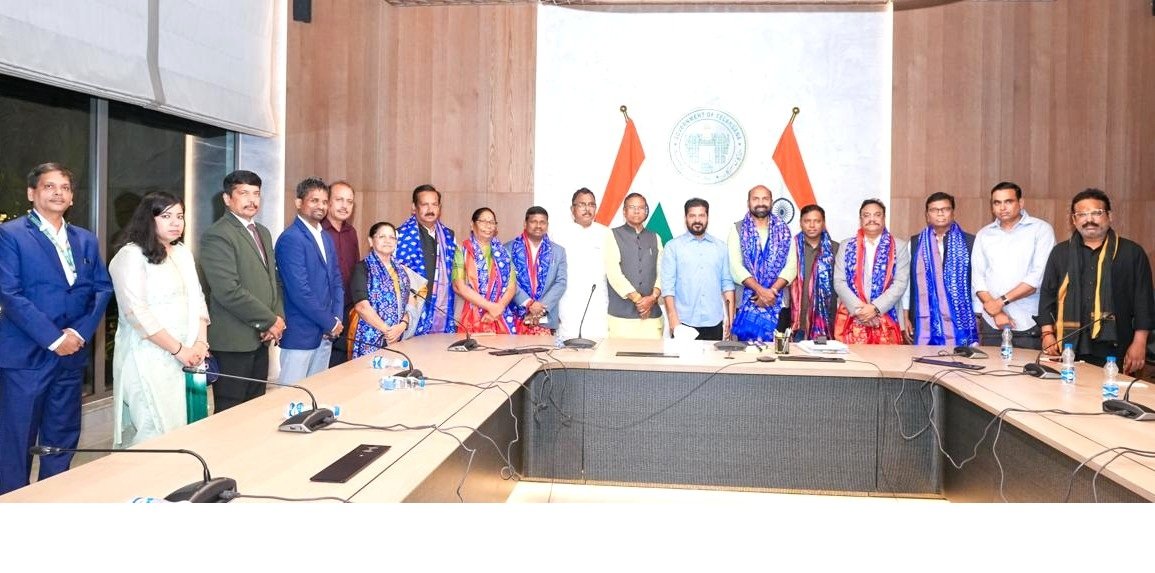
Telangana Chief Minister A. Revanth Reddy has placed the welfare of Scheduled Castes and Scheduled Tribes at the very heart of his government’s agenda. In a recent high-level interaction with members of the Parliamentary Committee on the Welfare of Scheduled Castes and Scheduled Tribes, the Chief Minister outlined a series of concrete steps his administration has already taken and continues to expand. The meeting, held at the MCR HRD Institute, brought together committee members and the panel’s Chairman, Dr. Faggan Singh Kulaste. What emerged was a clear picture of a state determined to convert constitutional promises into everyday realities for communities that have historically faced structural barriers.
The Chief Minister made it plain that adequate representation for SC and ST communities forms a non-negotiable pillar of governance in Telangana. He pointed to progress across education, employment, economic opportunities and political participation. These are not abstract claims. They rest on measurable appointments, budget allocations and policy firsts that distinguish Telangana from many other states.
Strong Political Representation for SC and ST Communities in Telangana
Political power remains one of the most effective levers for lasting change. Revanth Reddy highlighted that Dalits now occupy key positions, including the Speakership of the Legislative Assembly and several ministerial berths. The government has also opened doors in public corporations and ensured SC and ST candidates receive fair consideration in Public Service Commission recruitments. These moves go beyond tokenism. They create decision-makers who understand the lived experience of the communities they represent and who can push for practical solutions from inside the system.
By placing members of these communities in positions of authority, the administration sends a powerful signal. Young people from SC and ST backgrounds can now see tangible pathways into leadership. This visibility matters. It shapes aspirations in classrooms and villages across the state and slowly shifts the broader social conversation about who belongs in the halls of power.
Historic Academic Appointments Strengthen Higher Education Access
Education remains the surest route out of intergenerational disadvantage. The Chief Minister drew special attention to landmark appointments in the state’s universities. For the first time in Osmania University’s century-long history, a Dalit scholar now serves as Vice-Chancellor. Parallel appointments have placed SC and ST leaders at the helm of Dr. B.R. Ambedkar Open University and Rajiv Gandhi University of Knowledge Technologies (IIIT). These decisions were not symbolic gestures. They reflect a deliberate policy of appointing qualified individuals from these communities whenever eligibility and opportunity align.
Such leadership changes influence campus culture, research priorities and student support systems. When university heads come from backgrounds that once faced exclusion, they often prioritise mentoring programmes, scholarships and outreach that reach first-generation learners. The ripple effects appear in higher enrolment, better retention and stronger academic outcomes for students from SC and ST families.
Housing Priority Under Indiramma Scheme Delivers Tangible Security
Secure housing transforms daily life. The Telangana government has given clear priority to SC and ST families in the allocation of houses under the Indiramma programme. Owning a permanent home reduces vulnerability, improves children’s ability to study, and creates a foundation for economic stability. Families no longer live under the constant threat of eviction or the health risks that come with temporary shelters. This focused approach ensures that welfare spending reaches those who need it most rather than spreading thinly across the general population.
Substantial Share of Health and Relief Funds Directed to SC and ST Families
Health and emergency support form another critical pillar. The Chief Minister revealed that more than half of the Chief Minister’s Relief Fund and Arogyasri expenditures now benefit SC and ST communities. Arogyasri provides cashless treatment for serious illnesses, while the relief fund addresses immediate crises. Directing the majority of these resources toward historically marginalised groups demonstrates fiscal prioritisation that matches the government’s stated values. Families facing medical emergencies or sudden hardship can access help without navigating the same financial barriers that once forced impossible choices between treatment and daily survival.
Telangana Leads the Nation with SC Sub-Categorisation
Perhaps the most structurally significant reform is Telangana’s pioneering implementation of SC sub-categorisation. The state became the first in the country to put this policy into practice. Sub-categorisation addresses the reality that benefits within the broader Scheduled Caste category have not always reached the most disadvantaged subgroups evenly. By creating finer classifications, the government aims to ensure that the most marginalised sections receive their rightful share of reservations in education, employment and other opportunities.
Parliamentary Committee members publicly congratulated the Chief Minister on this achievement. Their endorsement carries weight because the panel examines welfare measures across the nation. Recognition from this body underscores that Telangana has moved from debate to delivery on an issue that many other states still discuss in theoretical terms.
Young India Integrated Residential Schools Expand Educational Horizons
Alongside sub-categorisation, the government has established Young India Integrated Residential Schools. These institutions aim to provide high-quality residential education that brings together students from different backgrounds while ensuring strong support for SC and ST learners. Residential schooling removes many of the daily obstacles that rural and economically weaker students face, including long travel, household duties and lack of quiet study space. When combined with competent teaching and a supportive environment, these schools can dramatically improve learning outcomes and open doors to higher education and competitive careers.
A Comprehensive Approach Linking Representation, Resources and Reform
The initiatives described by the Chief Minister do not exist in isolation. Political representation creates advocates inside government. Academic leadership shapes the next generation of professionals. Housing and health spending provide immediate material security. Sub-categorisation and specialised schools address deeper structural inequities. Together they form a multi-layered strategy that tackles both symptoms and root causes.
This approach stands in contrast to fragmented welfare schemes that offer temporary relief without changing the underlying distribution of opportunity. By focusing simultaneously on power, knowledge, assets and institutional design, Telangana’s government seeks durable progress rather than short-term optics.
Why These Steps Matter for Long-Term Social Mobility
Communities that have endured centuries of exclusion do not overcome disadvantage through single interventions. Progress requires sustained effort across generations. When a child from an SC or ST family sees a Vice-Chancellor who shares their background, attends a well-resourced residential school, lives in a secure house, and benefits from health coverage that does not bankrupt the family, the cumulative effect multiplies. Confidence grows. Educational attainment rises. Economic participation expands. Political engagement deepens. Each success story becomes a model for others, gradually shifting community norms and expectations.
The Chief Minister’s emphasis on “wherever they were eligible and opportunities were available” reveals a practical philosophy. Merit and fairness can coexist. Expanding the pool of qualified candidates through better education and support systems makes it possible to appoint more people from these communities without compromising standards. The result is both inclusion and excellence.
Looking Ahead: Sustaining Momentum on SC and ST Welfare
The meeting with the Parliamentary Committee offered an opportunity to take stock and receive external validation. Yet the real test lies in continued implementation and refinement. Budget allocations must remain protected. Appointment processes need transparency so that qualified individuals continue to rise. Sub-categorisation requires careful monitoring to ensure it delivers the intended equity without creating new frictions. Residential schools must maintain academic quality and pastoral care so that students thrive rather than merely attend.
Civil society organisations, local leaders and community members all have roles to play in holding the system accountable and suggesting improvements on the ground. Regular data collection on outcomes in education, employment, health and housing will allow course corrections and demonstrate results to the public.
Building a More Equitable Telangana Through Focused Governance
Revanth Reddy’s government has chosen to treat SC and ST welfare as a core governance priority rather than a peripheral concern. The combination of historic university appointments, substantial fund allocation, housing preference, political inclusion and the pioneering move on sub-categorisation presents a coherent narrative of intent matched by action. Committee members’ congratulations on the sub-categorisation and residential school initiatives suggest that external observers recognise the seriousness of the effort.
For citizens of Telangana, these policies translate into practical differences in daily life and future prospects. For other states watching closely, they offer a working example of how determined political leadership can translate constitutional values into measurable programmes. The work remains ongoing, yet the foundation now stands clearer and stronger than before. By keeping the focus on representation, resources and structural reform, the state continues to expand the circle of opportunity for communities that have waited too long for their rightful place.