

 By
Introduction:
Vedanta Group stocks attracted attention on November 27, 2026, after several listed group companies recorded gains despite a comparatively weak broader market. Hindustan Zinc, Vedanta Limited, Vedanta Aluminium, Vedanta Oil & Gas and Vedanta Iron & Steel were among the stocks discussed by market participants, while Vedanta Power remained comparatively weak.
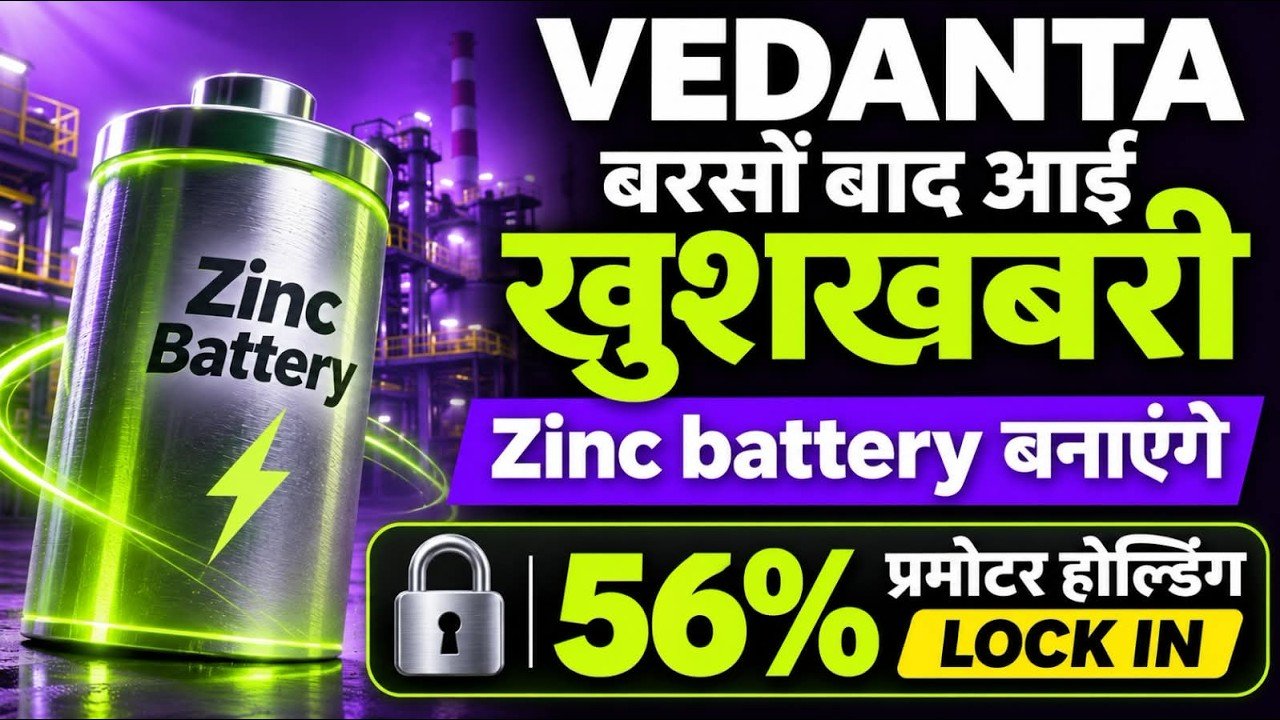
The positive sentiment came alongside an important technology development from Hindustan Zinc. The company, in collaboration with the Indian Institute of Technology Madras (IIT Madras), unveiled an electric three-wheeler prototype integrated with an approximately 1 kWh zinc-air battery. The battery has been developed as a range extender for electric mobility applications.
The development is significant because it demonstrates a potential new application for zinc beyond its traditional industrial uses. It also represents progress in the company’s research into indigenous energy-storage technology.
Another important update concerned Vedanta Power. Promoter-side entities executed non-disposal undertakings covering 56.38% of the company’s equity in favour of Power Finance Corporation (PFC). These undertakings are connected with financing for two coal-based thermal power projects.
This article examines the latest reported developments, the movement in Vedanta Group shares, the Hindustan Zinc–IIT Madras collaboration, and the implications of the Vedanta Power financing arrangement.
Vedanta Group Shares Rally Despite a Weak Market
According to market coverage published on November 27, 2026, Vedanta Group stocks experienced a broad recovery during the trading session. The rally came as prices of several industrial metals, including silver, copper and aluminium, recovered from recent lows.
Vedanta Limited rose during the session, while Hindustan Zinc and Vedanta Aluminium also recorded notable gains. The movement suggested that buying interest had returned to several group stocks after a period of weakness.
However, a single positive trading session does not confirm a sustained reversal. Share prices can rise because of short-term trading, commodity-price movements, technical factors or broader investor sentiment. A stronger trend generally requires continued buying, supportive financial performance and favourable sector conditions.
The November 27 rally is therefore best understood as a positive market development rather than proof that the long-term outlook has changed.
Vedanta Limited Share Price: Positive Trading on November 27
Vedanta Limited closed at approximately ₹245 in the transcript, following a previous close near ₹238. The stock reportedly opened around ₹242 and moved higher during the session, reaching an intraday high close to ₹246.
The reported closing gain was approximately 3.07%.
The day’s price action was notable because the stock moved higher from its opening level rather than experiencing a significant intraday decline. Such price action can indicate buying interest, although it does not independently establish the strength or sustainability of that demand.
Vedanta is often followed by investors for its diversified natural-resources business and dividend history. However, dividend-focused investors should examine the actual dividend declared, the record date, the company’s earnings and the market price before calculating the current dividend yield.
Dividend yield changes with the share price and the dividend amount. A yield quoted in an older video or market commentary may not represent the current yield.
What Could Influence Vedanta Limited Going Forward?
The company’s share price can be influenced by several factors:
- Prices of aluminium, zinc, copper and other commodities
- Production volumes and operating costs
- Debt levels and financing expenses
- Dividend announcements and capital-allocation decisions
- Global demand for metals
- Developments across its subsidiaries and associated businesses
The November 27 movement showed renewed positive sentiment, but investors should continue to assess these underlying factors.
Vedanta Aluminium and Metals Share News
Vedanta Aluminium recorded a strong gain in the session described in the transcript. The stock reportedly closed around ₹369, compared with the previous close near ₹353.
The transcript also referred to an intraday high near ₹373. The reported gain was approximately 4.64%.
Aluminium prices are an important factor for companies operating in the aluminium value chain. A recovery in aluminium prices can improve market sentiment toward producers, although the actual financial benefit depends on production costs, energy expenses, realised prices and other operational factors.
Investors should also consider global aluminium demand, supply conditions and the company’s capital expenditure plans.
A sharp daily rise may attract short-term traders, but longer-term investors generally need to examine quarterly results and the company’s operating performance.
Vedanta Oil & Gas Share Movement
Vedanta Oil & Gas reportedly closed around ₹29.50, recording a gain of approximately 1.30% in the session.
The movement was smaller than the gains reported in Vedanta Limited and Vedanta Aluminium, but it contributed to the broadly positive sentiment across several Vedanta Group stocks.
Oil and gas businesses are influenced by crude oil and natural gas prices, production levels, operating costs, regulatory conditions and investment requirements.
Investors following this segment should avoid relying only on the daily share-price movement. The company’s production performance, cash flows and financial obligations remain important factors in evaluating its business outlook.
Vedanta Iron & Steel: Shares Remain Below Previous Highs
Vedanta Iron & Steel reportedly closed near ₹24.28, with a gain of approximately 1.97%.
The transcript highlighted that the stock remained considerably below its previous high of around ₹44. This comparison illustrates the extent of the earlier decline, but a lower price does not automatically mean that a stock is undervalued.
A share price can remain below its previous high because of changes in business performance, market expectations, corporate structure, liquidity or investor sentiment.
Before interpreting a recovery as an opportunity, investors should examine the company’s current fundamentals and understand the reasons behind its earlier decline.
Hindustan Zinc Share News: Strong Rally After Battery Technology Update
Hindustan Zinc was one of the key stocks in the latest Vedanta Group discussion.
The transcript reported a closing price of approximately ₹545 and a gain of around 3.49%. Market coverage also reported an intraday rise, with the stock reaching a higher level during the session.
The company’s positive market attention coincided with its announcement of a collaboration with IIT Madras to advance zinc-air battery technology for electric mobility.
The development has attracted interest because it could create new value-added applications for zinc. Hindustan Zinc is primarily known as a major zinc and silver producer, and research into battery technology may provide an additional avenue for exploring the metal’s potential.
However, the battery project remains a technology-development initiative. Investors should not assume that the announcement immediately creates substantial commercial revenue.
Hindustan Zinc and IIT Madras Collaborate on Zinc-Air Batteries
Hindustan Zinc and IIT Madras unveiled an electric three-wheeler prototype integrated with an approximately 1 kWh zinc-air battery.
The prototype was presented during the IIT Madras Energy Summit 2026. The development represents progress in the collaboration between the company and the academic institution, which began in 2024.
The battery has been developed as a range extender for electric mobility applications. The prototype uses a dual-battery configuration, with the zinc-air battery contributing approximately 10% of the vehicle’s total energy requirements.
This distinction is important. The announcement does not describe a fully zinc-air-powered commercial electric vehicle. Instead, it demonstrates how zinc-air technology could complement an existing battery system.
What Is a Zinc-Air Battery?
A zinc-air battery generates electricity through a chemical reaction involving zinc and oxygen from the surrounding air.
The technology has attracted research interest because zinc is widely available, recyclable and used in several established industrial applications.
Zinc-air batteries may offer potential advantages in areas such as:
- Energy storage
- Electric mobility applications
- Material availability
- Potential safety characteristics
- New value-added uses for zinc
The actual performance of a battery depends on its design, materials, operating conditions and charging or replacement requirements.
The IIT Madras collaboration is intended to address technical challenges and explore practical applications.
Why the 1 kWh Prototype Matters
The approximately 1 kWh zinc-air battery integrated into the three-wheeler prototype is an important demonstration milestone.
It shows that the technology has progressed beyond laboratory-level research toward a vehicle-level application.
The battery is being tested as a range extender, which means it can supplement the vehicle’s primary battery system and contribute additional energy.
The reported contribution of approximately 10% of the vehicle’s total energy requirements provides a useful indication of its role in the prototype.
It should not be interpreted as a guarantee of the same performance across all vehicles or operating conditions.
Potential Applications in Electric Three-Wheelers
Electric three-wheelers are widely used for passenger and commercial transportation in India. Their operating requirements can include frequent stops, repeated charging, high daily usage and cost-sensitive ownership.
A complementary battery technology could potentially help manufacturers explore different energy-storage configurations.
Zinc-air technology may be investigated for applications where its energy characteristics, material availability and design can provide a practical advantage.
However, commercial adoption would depend on several factors, including:
- Battery performance and durability
- Charging or replenishment methods
- Cost of production
- Vehicle integration
- Maintenance requirements
- Safety testing
- Manufacturing scalability
The prototype is an early step in evaluating these possibilities.
Zinc-Based Energy Storage and India’s Battery Opportunity
India’s electric-mobility and renewable-energy sectors require dependable energy-storage solutions.
Solar and wind power generation can vary according to weather and time of day. Energy storage can help manage differences between electricity generation and demand.
Battery research is therefore relevant not only to electric vehicles but also to stationary storage applications.
Hindustan Zinc’s collaboration with IIT Madras is part of a broader effort to explore new uses for zinc and develop indigenous energy-storage technology.
The project may help the company investigate additional demand for zinc in future applications. Nevertheless, the scale of any commercial opportunity will depend on successful development, validation and market adoption.
Hindustan Zinc’s Strategy to Expand Zinc Applications
Hindustan Zinc has traditionally operated in the mining and metals sector, with zinc and silver forming important parts of its business.
Research into zinc-based batteries reflects an effort to explore applications beyond conventional metal production.
The company has stated that it wants to unlock greater value from zinc and investigate new opportunities in energy storage and electric mobility.
This strategy could be relevant if battery technology becomes commercially viable and creates demand for zinc-based materials.
At the same time, research and development projects involve uncertainty. The transition from a prototype to a commercial product may require additional testing, investment, manufacturing partnerships and regulatory approvals.
Investors should therefore treat the collaboration as a long-term technology development rather than an immediate earnings catalyst.
Vedanta Power Share News: PFC Arrangement Covers 56.38% of Equity
Another important development concerns Vedanta Power and Power Finance Corporation.
The transcript described the arrangement as a pledge or locking of promoter shares. More precisely, the reported disclosure relates to non-disposal undertakings covering 56.38% of Vedanta Power’s equity in favour of PFC.
The undertakings were dated November 25, 2026, and were connected with rupee term loans for two coal-based thermal power projects.
The shares were not transferred to PFC, and the disclosure does not mean that PFC acquired ownership of the company.
What Does a Non-Disposal Undertaking Mean?
A non-disposal undertaking is a commitment not to sell or otherwise dispose of specified shares, subject to the terms of the arrangement.
In this case, promoter-side entities agreed to maintain specified minimum shareholding levels while the relevant loans remain in force.
The arrangement was reported as an encumbrance under the applicable securities regulations.
It is important to distinguish this from an outright sale of shares. PFC’s disclosed shareholding remained nil, and the arrangement did not give it ownership of the covered shares.
Why Vedanta Power Needed Financing
The transcript stated that the financing was intended to support two coal-based thermal power projects.
The projects described include:
- A 2 × 600 MW subcritical thermal power project in Chhattisgarh
- A 3 × 660 MW supercritical thermal power project in Punjab
The financing arrangement is linked to these projects and their funding requirements.
Large power projects require significant capital for construction, equipment, infrastructure and other development expenses. Term loans can help fund such projects over an extended period.
The non-disposal undertakings provide the lender with commitments regarding promoter ownership while the loans remain outstanding.
Does the PFC Arrangement Mean Vedanta Power Shares Are Fully Locked?
The arrangement places restrictions on disposal of the shares covered by the undertakings, according to the reported disclosure.
However, investors should rely on the formal exchange filing for the exact legal terms, the duration of the restrictions and the minimum shareholding requirements.
The transcript’s description of the shares being “locked” should not be interpreted as a transfer of ownership to PFC.
The arrangement is financing-related and should be understood in that context.
Why Vedanta Power Was the Exception in the Group Rally
While several Vedanta Group stocks recorded gains, Vedanta Power reportedly closed around ₹33.99, down approximately 0.38%.
The stock’s weaker performance stood out against the broader recovery in the group.
The PFC financing-related disclosure may have attracted attention, but the share-price movement cannot be attributed to a single factor without further evidence.
Vedanta Power’s outlook may depend on project execution, financing costs, power-sector conditions, fuel availability, regulatory requirements and the company’s financial performance.
Investors should also examine the terms of the loans and the commitments associated with the promoter undertakings.
Is Vedanta Group Stock a Buying Opportunity After the Rally?
The transcript raises a common question: if Vedanta Group shares remain below their previous highs and the market has already recovered, could the group stocks offer an opportunity?
There is no single answer that applies to every Vedanta Group company.
A stock trading below its previous high may attract attention, but the price alone does not establish value. Investors need to understand why the stock declined and whether the company’s earnings outlook has improved.
Factors Investors May Evaluate
Before making an investment decision, investors may consider:
- Commodity prices: Changes in zinc, aluminium, silver and other metal prices can affect market sentiment and business profitability.
- Financial performance: Revenue, margins, cash flow and debt levels provide a clearer picture of business strength.
- Capital expenditure: Large expansion projects can create future growth but may also increase financing requirements.
- Dividend policy: Dividend declarations and payout sustainability matter for income-focused investors.
- Corporate disclosures: Pledges, encumbrances, financing arrangements and subsidiary developments can affect risk.
- Valuation: A lower share price should be compared with earnings, assets, cash flow and business prospects.
- Market conditions: Global commodity demand and investor sentiment can influence short-term movements.
The November 27 rally may indicate improved buying interest, but investors should avoid assuming that every group stock will move in the same direction.
Vedanta Group Share News: Key Takeaways
The latest developments highlight three important themes.
First, several Vedanta Group stocks recorded gains on November 27, 2026, as metal prices recovered from recent lows.
Second, Hindustan Zinc’s collaboration with IIT Madras reached a notable milestone with the unveiling of an electric three-wheeler prototype featuring an approximately 1 kWh zinc-air battery as a range extender.
Third, Vedanta Power’s promoter-side entities executed non-disposal undertakings covering 56.38% of the company’s equity in favour of PFC in connection with financing for two thermal power projects.
These developments may influence investor interest, but their long-term significance will depend on continued business performance, successful project execution and the commercial progress of new technology.
Frequently Asked Questions
What is the latest news about Hindustan Zinc?
Hindustan Zinc collaborated with IIT Madras to unveil an electric three-wheeler prototype integrated with an approximately 1 kWh zinc-air battery. The battery is being used as a range extender for electric mobility applications.
What is the purpose of Hindustan Zinc’s zinc-air battery?
The technology is being explored for energy storage and electric mobility. In the demonstrated prototype, the zinc-air battery supplements the primary battery system and contributes approximately 10% of the vehicle’s total energy requirements.
Why did Vedanta Group shares rise on November 27, 2026?
Market coverage linked the rally in several Vedanta Group stocks to a recovery in metal prices, including silver, copper and aluminium. Individual stock movements can also reflect company-specific and market-related factors.
What is the PFC arrangement involving Vedanta Power?
Promoter-side entities executed non-disposal undertakings covering 56.38% of Vedanta Power’s equity in favour of PFC. The arrangement is linked to term loans for two coal-based thermal power projects. It does not mean that PFC acquired ownership of the shares.
Is Vedanta Group a good investment?
Investment suitability depends on an investor’s financial goals, risk tolerance, valuation assessment and research. A short-term rally or a share price below its previous high is not sufficient on its own to establish a buying opportunity.
Conclusion
Vedanta Group share news on November 27, 2026, featured a broad recovery in several listed group companies, a technology milestone at Hindustan Zinc and a financing-related disclosure involving Vedanta Power.
The Hindustan Zinc–IIT Madras collaboration is particularly noteworthy because it demonstrates a potential new application for zinc in electric mobility. The project may support future research into indigenous energy-storage solutions, although commercial adoption will depend on further development and validation.
Meanwhile, the PFC arrangement involving Vedanta Power should be understood as a non-disposal undertaking connected with project financing, rather than an outright transfer of promoter shares.
Investors following Vedanta Group stocks should monitor official company announcements, financial results, commodity prices and project developments before making decisions.
Financial Disclaimer: This article is for informational and educational purposes only. It is not investment advice or a recommendation to buy, sell or hold any security. Stock prices, dividend yields and analyst opinions can change. Investors should conduct independent research and consult a qualified financial adviser before making investment decisions.
URL Slug: vedanta-group-share-news-hindustan-zinc-iit-madras-battery
Meta Description: Vedanta Group share news for November 27, 2026: Hindustan Zinc and IIT Madras unveil a zinc-air battery prototype, Vedanta shares rally, and Vedanta Power reports a PFC financing-related share undertaking.